
Licensed Professional Counseling in Fort Worth, Texas

My Strategy in Therapy
Each therapist has their own strategies they believe help jumpstart the process. Here are a few that my clients have found most helpful.
-
Evidence-based therapy means your treatment is guided by research, professional standards, and ongoing clinical development — while still being tailored to your individual goals, experiences, and strengths. These therapeutic approaches that have been researched, tested, and shown to be effective in treating anxiety, depression, trauma, and stress-related concerns.
Rather than using a one-size-fits-all method, I integrate clinically supported models such as Cognitive Behavioral Therapy (CBT), Acceptance and Commitment Therapy (ACT), trauma-informed interventions, and skills drawn from DBT and attachment research. These approaches are structured, practical, and focused on measurable progress.
-
Mindfulness is the practice of developing greater awareness of your thoughts, emotions, and physical sensations without immediately reacting to them.
I integrate mindfulness techniques to strengthen emotional regulation, reduce anxiety, and improve clarity under stress. Rather than emptying the mind, mindfulness in my practice focuses on increasing capacity, focus, and steadiness in the present moment.
Over time, this awareness builds resilience and helps you navigate challenges with greater composure and perspective.
-
Internal Family Systems (IFS) is an evidence-informed therapeutic approach that helps identify and understand the different “parts” of you that influence thoughts, emotions, and behavior. For example, one part may push you to achieve and perform, while another may carry fear, shame, or self-doubt.
Rather than fighting these internal experiences, IFS helps you relate to them with understanding. As you learn to understand the roles these parts have played, reactive patterns give way to more grounded decision-making.
The goal is not to eliminate parts of you — but to strengthen your ability to lead yourself with greater calm, confidence, and alignment.
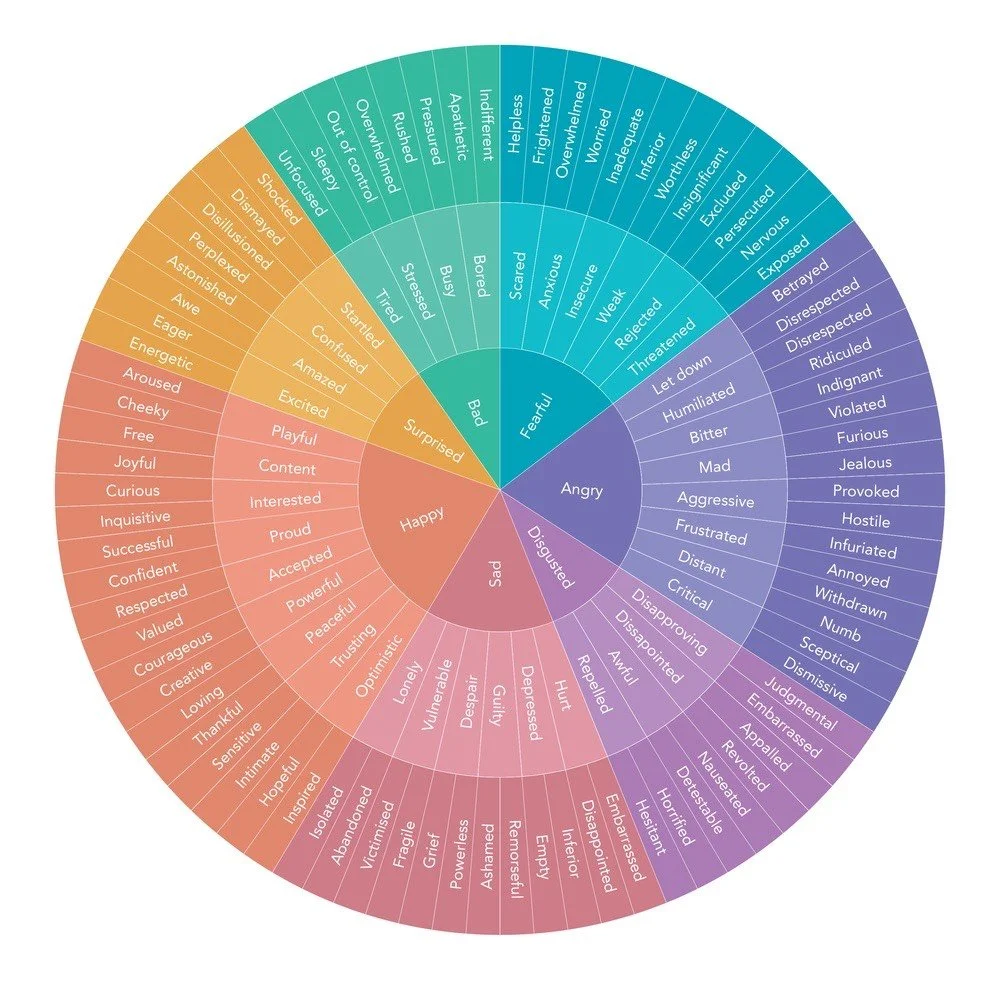
The Emotion Wheel
Naming our emotions is a necessary skill for processing our internal experience. Please use this whenever you are finding it difficult to identify what you are feeling.
Step 1: Reach out and schedule your session
Step 2: Complete Intake Paperwork
Step 3: Begin your journey, together